
ENAR 2027 Educational Program | ROUNDTABLES
Roundtables are conversations centered around a predetermined topic and led by a discussion leader. Due to the small group size, all attendees can participate equally, providing a more intimate discussion than a larger scientific session. All Roundtables take place Monday, March 15th.
RT1 | NIH Funding Opportunities for Statisticians
Description:
This roundtable will provide an overview of NIH funding opportunities relevant to statisticians and quantitative scientists, including mechanisms that support methodological research, collaborative biomedical studies, training, and career development. Participants will discuss NIH priorities, strategies for identifying appropriate funding opportunities, and tips for preparing competitive applications. The session will also offer an opportunity for attendees to ask questions and share experiences navigating the NIH funding landscape.
Instructor: Li Zhu, National Institutes of Health/National Cancer Institute
Instructor Biography:
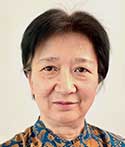
Dr. Zhu is a Program Director in the Surveillance Research Program at the National Cancer Institute, where she oversees and develops a portfolio of extramural research focused on statistical methods, cancer surveillance, population-based data, and cancer outcomes. Her research interests include spatial and spatiotemporal statistics, Bayesian modeling, small-area estimation, disease mapping, and methods for analyzing complex surveillance data. In her role, she advises investigators on NIH funding opportunities, supports methodological innovation, and promotes rigorous quantitative approaches to improve the analysis and interpretation of cancer surveillance data.
RT2 | Staying in the Driver's Seat: Calibrating AI Use in Statistical Research, Training, and Practice
Description:
Generative AI tools are now part of daily biostatistical work. They draft code, summarize literature, write methods sections, and increasingly carry out substantive parts of an analysis. The productivity gains are real. So is a quieter risk: as AI takes on more of the work, it becomes easy to accept output we have not fully reasoned through, and over time to lose the vigilance about errors and the understanding of why a result is right that defines our profession.
This roundtable is a working discussion of how to calibrate AI use so that it accelerates our research, training, and teaching without hollowing out the judgment underneath. It draws on a guide for AI-assisted statistical work developed within the Rashid Lab and presented in the ASA StatsUp.AI webinar series, and on pre-AI cognitive science about tool use, learning, and expert intuition. Rather than a lecture, the aim is to trade practices and disagreements across the settings in which ENAR members work.
Questions we will take up: Which parts of a statistical project should never be delegated, and does the answer differ for a faculty member, a postdoc, a first-year doctoral student, and a master's student in a methods course? Which concrete habits (reading everything that ships, a pause to write your own approach before prompting, decision logs, explain-it-back checks) hold up under deadline pressure? How should doctoral programs and courses set AI policy so that trainees build intuition rather than borrow it? What do collaborators, journals, and regulators reasonably expect of AI-assisted analyses, and how should we document them? Participants are encouraged to bring their own lab or department policies, near misses, and open questions.
Anyone who uses AI tools in their statistical work, or who supervises or teaches people who do, will find the discussion relevant. No technical background in AI is needed.
Instructor: Naim Rashid, Department of Biostatistics, Gillings School of Global Public Health, and Lineberger Comprehensive Cancer Center, University of North Carolina at Chapel Hill
Instructor Biography:
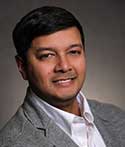
Naim Rashid, PhD, is Associate Professor of Biostatistics at the UNC Gillings School of Global Public Health, with a joint appointment at the UNC Lineberger Comprehensive Cancer Center. His research group develops statistical and machine learning methods for precision oncology, spanning adaptive and Bayesian trial design, deep learning, and high-dimensional inference for genomic data. The group's translational work has produced open-source software and a CLIA-certified clinical diagnostic now in clinical practice and multi-site trials. He serves on the Nature Medicine Statistical Advisory Panel and the V Foundation Scientific Advisory Board, is an Associate Editor of the Annals of Applied Statistics, and co-directs biostatistics cores for the UNC breast and pancreatic SPOREs. He is a recipient of the James E. Grizzle Distinguished Alumnus Award and the UNC Gillings Teaching Innovation Award. His group has developed internal policies for the deliberate use of AI tools in research and graduate training, and he speaks regularly on calibrating AI use in statistical practice.
RT3 | How to Ace the Academic Job Interview
Description:
Academic job interviews are often grueling, multi-day affairs, the purpose of which is typically to assess not only a candidate's research ability, but also their fit within a department. They can be intimidating, and solid preparation is key. In this roundtable, we will discuss strategies to prepare for and ace the interview, with topics including common structures or agendas, tips for successful job talks and one-on-one meetings, and meals with faculty. We'll also discuss the little details, like attire, etiquette, and the importance of working well with staff. Join us for an exciting, open, and honest conversation about the ups and downs of the interview process.
Instructor: Nicholas Seewald, University of Pennsylvania
Instructor Biography:
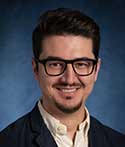
Nick Seewald is an Assistant Professor of Biostatistics at the University of Pennsylvania Perelman School of Medicine, which he joined in 2023. He went on the job market twice: once for teaching-focused faculty roles and a postdoc, and the second time for more research-oriented faculty roles. Both times were successful in the end, but not without challenges. As a member of the faculty recruitment committee at Penn, he has recent experience on both sides of the interview table. Nick is a passionate mentor and communicator, and he's always excited to help others learn from his successes and (many) failures.
RT4 | From Member to Leader: Shaping the Field Through Volunteer Leadership
Description:
Every major scientific society is powered by the passion and dedication of its members, but what does it take to transition into a leadership role? This roundtable explores the dynamics of volunteer leadership in professional organizations like ENAR, where service is often fueled by a commitment to the discipline and a desire to give back. Together, we will discuss how stepping into these roles allows you to shape the future of our field, amplify your professional visibility and expand your network. We will also address the practical side of service, sharing strategies for balancing volunteer commitments with your primary institutional responsibilities. Whether you are curious about joining your first committee or are considering running for elected office, this session offers essential insights to help navigate your leadership journey. Join us for a candid, collaborative conversation on transitioning from an active member to an impactful leader shaping the future of our profession.
Instructor: Scarlett Bellamy, Boston University School of Public Health
Instructor Biography:
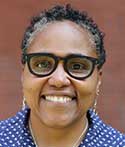
Scarlett L. Bellamy, ScD is currently Professor and Chair of Biostatistics at Boston University’s School of Public Health where she leads a large, vibrant department. Her work largely centers on evaluating the efficacy of interventions in longitudinal behavioral modification trials, including cluster- and group-randomized trials. She is particularly interested in applying this methodology to address health disparities for a variety of clinical and behavioral outcomes. Prior to transitioning to BU, she was a professor in the Department of Epidemiology and Biostatistics where she also served as the associate dean for diversity and inclusion at Drexel University Dornsife School of Public Health. Dr. Bellamy is a former ENAR president and ASA Fellow.
RT5 | Statistics on the Stand: What Statisticians Have to Offer as Expert Witnesses
Description:
We will discuss expert witness work, with a focus on challenging the validity of forensic identification methods in criminal trials. Topics include the relevance of (bio)statistical expertise, preparation of draft reports and declarations, and testifying on the stand.
Instructor: Elizabeth Ogburn, Johns Hopkins Bloomberg School of Public Health
Instructor Biography:
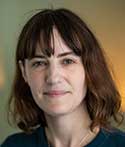
Betsy Ogburn is Professor of Biostatistics at Johns Hopkins University. She is also a member of the Data Science and AI Institute at Johns Hopkins University and affiliated faculty of the Center for Causal Inference at University of Pennsylvania. Betsy received an A.B. in Philosophy and Mathematics from Harvard University, an M.S. in Statistical Genetics from Columbia University, and a Ph.D. in Biostatistics from Harvard University. She is a 2016 National Academy of Science Kavli Fellow and 2022 winner of the Committee of Presidents of Statistical Societies Emerging Leader Award.
RT6 | When Things Go Wrong as They Sometimes Will: Embracing Failure in Research
Description:
This roundtable is designed for undergraduates who have participated in a research experience for undergraduate (REU) program or graduate students who have served in a role as a research assistant, independent study, or thesis work. An essential skill in the research process is learning to become comfortable with failure. Attending a conference for the first time can feel overwhelming and intimidating, especially when most of the sessions highlight talks with polished results and successful projects. Seldom are the many attempts that did not work acknowledged or discussed.
This session aims to destigmatize those ‘failed’ research moments and explore how they can become powerful learning experiences. The moderator will facilitate a candid conversation amongst students about projects that did not go as planned. This may include internal or external obstacles they encountered, barriers they faced, and unexpected setbacks along the way.
Building on these shared experiences, the discussion will then shift toward practical strategies we can integrate to reframe our failures: identifying the lesson learned, seeking support from both peers and senior mentors, troubleshooting, and determining when and how to refine your research question, approach, and desired outcomes.
This roundtable aims to normalize failure and embrace it as an integral part of the research process. Students will be encouraged to embrace a more realistic view of research as a nonlinear process. Participants will leave with concrete ideas for how to develop a healthy mindset toward failure as they embark on their career towards esearch independence.
Instructor: Tanya Garcia, University of North Carolina at Chapel Hill
Instructor Biography:
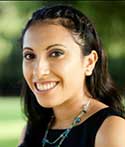
Tanya Garcia is an Associate Professor of Biostatistics, Provost Distinguished Faculty Leader, and Tyson Academic Leader at the University of North Carolina at Chapel Hill. For over a decade, she has led a transdisciplinary research team of statisticians and neuroscientists toward designing robust statistical methods for neurodegenerative diseases. Dr. Garcia combines her excitement for modeling with her interest in training the next generation of (bio)statisticians to embrace a growth mindset and tackle obstacles without judgment or fear. How she mentors this next generation is largely motivated by 500+ hours of grantsmanship and leadership training. Her desire for every mentee to achieve success and fulfillment drives her every leadership decision. These decisions have led Dr. Garcia to not only maintain continuous funding of multiple grants as Principal Investigator from the National Institutes of Health, but also coach 50 mentees and counting to achieve over 80 awards, grants, and fellowships. She has also received numerous competitive awards, including the Gertrude M. Cox Award, Landis Award for Outstanding Mentorship, and being named a fellow of the American Statistical Association.
RT7 | Building Trust and Influence: Statistical Leadership in Team Science
Description:
As scientific research becomes increasingly collaborative and interdisciplinary, statisticians play a critical role not only in analysis but also in shaping research questions, study design, and interpretation. Yet statisticians are often brought in late or positioned primarily as technical contributors rather than as strategic partners. When statisticians take on leadership roles in team science, they help ensure that rigorous evidence moves beyond analysis to actually drive change and have real impact.
This interactive roundtable will explore how statisticians can move from analysts to trusted thought partners within interdisciplinary teams. Topics will include building trust and credibility across disciplines, influencing scienti�c direction, and navigating team dynamics in settings where statisticians may not hold formal authority. We will also discuss common challenges in real-world collaborations, such as competing priorities, time pressures, and balancing methodological rigor with practical constraints.
Participants will be encouraged to share their own experiences and challenges, which may be discussed through open conversation or brief scenarios. We will also explore how these challenges play out across different settings, including academia, industry, and government.
This roundtable will create space to exchange experiences and talk through practical ways to strengthen the role of statisticians in team science.
Instructor: Ana M. Ortega-Villa, Associate Director, Biostatistics at Biogen
Instructor Biography:
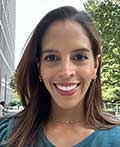
Ana Ortega-Villa, PhD is an Associate Director - Biostatistics at Biogen. Prior to this role, she served as a mathematical statistician at the National Institute of Allergy and Infectious Diseases (NIAID). She completed postdoctoral fellowships at the Eunice Kennedy Shriver National Institute of Child Health and Human Development and the National Cancer Institute, and earned her PhD in Statistics from Virginia Tech, where she currently serves as an Adjunct Professor. Her interests include design and analysis of clinical trials and observational studies, longitudinal data, mixed models, postpartum depression, immunology, research capacity building, statistics education, and initiatives that foster a culture of belonging. Dr. Ortega-Villa is a COPSS Emerging Leader, the Chair of the American Statistical Association Biometrics Section, a member of ENAR RECOM, and an Associate Editor of Statistics in Medicine.
RT8 | Beyond Academia: Industry Career Paths for Statisticians
Description:
What does a career in statistics look like outside academia? In this roundtable, Lorin Crawford and Irina Degtiar will share their career journeys in tech, health policy, and pharma and discuss how statistical methods are applied in practice. We will discuss topics such as the range of career options, transitioning from an academic environment, day-to-day work, professional growth, and the interview process. The session is intended to provide candid perspectives and facilitate conversation among attendees considering a range of career paths.
Instructors:
Lorin Crawford, Microsoft
Irina Degtiar, Boehringer Ingelheim Pharmaceuticals
Instructor Biographies:
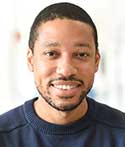
Lorin Crawford is a Principal Researcher at Microsoft Research. His research program focuses on developing interpretable machine learning and AI algorithms to study how genetic effects and their interactions influence human disease. As part of this work, he co-leads Project Ex Vivo, a collaborative effort between Microsoft and the Broad Institute of MIT and Harvard focused on defining, engineering, and targeting cell states in cancer. Dr. Crawford has been featured on Forbes 30 Under 30 and The Root 100 Most Influential African Americans list. He has also received an Alfred P. Sloan Research Fellowship, a Packard Foundation Fellowship for Science and Engineering, a COPSS Emerging Leader Award, and the Annie T. Randall Innovator Award from the Biometrics Section of the ASA. Dr. Crawford earned his PhD from the Department of Statistical Science at Duke University, and he received his Bachelor of Science degree in Mathematics from Clark Atlanta University.
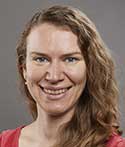
Irina Degtiar is a Principal Methodology Statistician in Real World Evidence at Boehringer Ingelheim, where she applies causal inference methods to integrate observational data with randomized clinical trial data to strengthen clinical development. Previously, she led causal analyses at Mathematica to guide health policy decisions and has worked in health economics and outcomes research consulting for personalized medicine diagnostics. Irina holds a Ph.D. in biostatistics from Harvard University.
RT9 | Navigating PCORI Funding: Opportunities, Challenges, and Strategies for Biostatisticians
Description:
The Patient-Centered Outcomes Research Institute (PCORI) offers important opportunities for biostatisticians to lead and contribute to patient-centered comparative effectiveness research, but developing a successful PCORI proposal requires navigating funding priorities, stakeholder engagement, study design considerations, and expectations that may differ from traditional NIH funding mechanisms. This roundtable will provide an interactive forum for biostatisticians interested in pursuing PCORI funding to share experiences, discuss challenges, and develop practical strategies for success.
The roundtable will draw on participants’ collective experiences with PCORI proposals and funded research, including lessons learned from successful and unsuccessful applications. Topics may include common challenges in proposal development, approaches to incorporating stakeholder priorities into study design, strategies for strengthening the methodological sections of applications, and navigating the practical and methodological complexities that arise during PCORI-funded research.
Participants are encouraged to bring questions, ideas for potential PCORI projects, and their own experiences. The goal is to leave with concrete strategies for identifying opportunities, developing competitive proposals, and positioning biostatisticians as essential partners and leaders in patient-centered research.
Instructor: Kelley Kidwell, University of Michigan
Instructor Biography:

Dr. Kidwell is interested in the design and analysis of clinical trials. Her methodological work centers on better matching the way in which we practice medicine and public health (critical decisions over time tailored to individuals) to the way in which we experimentally study it. Dr. Kidwell's methods work has primarily focused on the design and analysis of sequential, multiple assignment, randomized trials (SMARTs), in standard or large size trials for treating common diseases and disorders, and in small samples or for treating rare diseases. She has had 3 PCORI Improving Methods Contracts, been a member of the PCORI Clinical Trials Advisory Panel, and reviewed and consulted for PCORI.
RT10 | Teaching Statistical Programming in the Era of Generative AI: What Should Change, What Shouldn't, and Why?
Description:
Generative AI is reshaping how students learn and practice statistical programming. Tasks such as writing code, debugging, creating visualizations, and documenting analyses can now be completed with AI assistance, prompting important questions for statistics educators. What programming skills should students still master independently? How should curricula, assignments, and assessments evolve? Which foundational competencies must remain unchanged to ensure statistical reasoning, reproducibility, and ethical practice?
This roundtable will bring together educators, practitioners, and researchers to discuss the opportunities and challenges of teaching statistical programming in the age of AI. Topics will include coding fluency versus conceptual understanding, evaluating and debugging AI-generated code, authentic assessment strategies, academic integrity, and preparing students for an AI-enabled workforce. Participants will share experiences, challenges, and emerging practices, with the goal of identifying what aspects of statistical programming education should change, what should remain unchanged, and how best to prepare students for the future.
Instructor: Rameshbabu Manyam, Rollins School of Public Health, Emory University
Instructor Biography:

Dr. Manyam is a Rollins Endowed Faculty Scholar and Assistant Research Professor in the Department of Biostatistics and Bioinformatics at Emory University. He leads the Applied Artificial Intelligence and Data Translation concentration in Rollins’ Doctor of Public Health (DrPH) program and researches computationally efficient machine learning and AI approaches for healthcare applications. A trained computer scientist, Dr. Manyam brings extensive experience in data-driven research, healthcare data, statistical programming, and the development of databases, risk models, custom AI chatbots, and software applications. He teaches Python and SQL to public health graduate students and has mentored more than 70 graduate students at Rollins. His teaching and research interests include preparing public health professionals to use AI tools effectively while understanding the principles underlying them.
Dr. Manyam is a recipient of several awards for teaching, innovation, mentorship, and research, including Emory’s Provost’s Distinguished Teaching Award for Excellence in Graduate and Professional Education, the Emory Innovation Award, and the Biostatistics and Bioinformatics Faculty Mentor Award. He is actively involved in professional organizations through service and presentations, including IEEE, AMIA, and ENAR.